(848) 800-8482 |
info@njairportcarservice.com
Ride more, spend less – apply promo code (RIDE5) now and get 5% off.
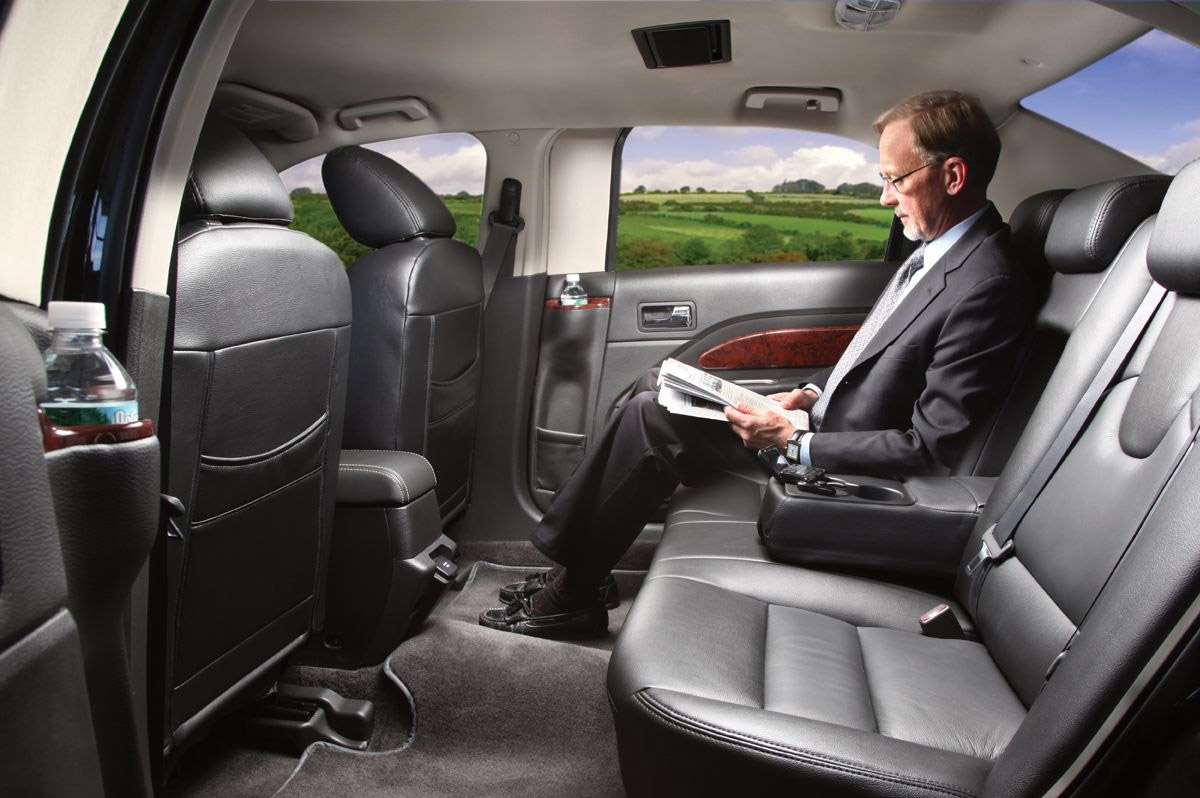
When a company brings clients, executives, speakers, consultants, or other business guests to New Jersey, transportation is an important part of the overall travel experience. A missed pickup, unclear meeting point, or poorly timed transfer can create unnecessary stress before an important meeting or event.
Planning corporate guest transportation does not necessarily mean choosing the most expensive option. It means matching transportation arrangements to the guest's schedule, destination, group size, accessibility needs, and business itinerary.
New Jersey's location within the Northeast Corridor also makes planning particularly important. The state connects major business centers around New York and Philadelphia and has several commercial and general aviation facilities. Newark Liberty International Airport is one of the state's international airports, while Teterboro, Morristown, and other airports support corporate and private aviation.
This guide explains how businesses can organize reliable corporate guest transportation in New Jersey, what information to collect, which vehicle types may be appropriate, and how to account for traffic, scheduling, and costs. Companies arranging recurring travel can also review our NJ corporate travel service for a sense of how a standard booking process works.
Corporate guest transportation refers to ground transportation arranged by a business for people visiting or traveling on behalf of the organization.
Guests may include:
Depending on the itinerary, business guest transportation in New Jersey can include airport transfers, hotel transportation, office-to-office travel, event transportation, and transportation between multiple business locations.
The objective is usually straightforward: make the guest's journey predictable and convenient while allowing the company to coordinate transportation around its business schedule.
The first step is to understand the entire trip rather than booking individual rides without considering the wider schedule.
Collect the following information:
This information helps a company determine whether it needs a single transfer or a coordinated transportation plan.
Not every business trip requires the same type of vehicle or service.
For visitors flying into New Jersey, corporate airport transportation NJ arrangements can connect the airport with hotels, offices, conference venues, or other destinations.
New Jersey has two international airports—Newark Liberty International and Atlantic City International—along with numerous public-use and general aviation facilities.
When arranging an airport transfer, provide the transportation provider with the guest's flight information. This gives the provider useful context for monitoring arrival status and coordinating the pickup. Travelers arriving through Newark Liberty International Airport should confirm current pickup procedures before the guest's trip.
Senior executives or VIP guests may have more demanding schedules and several appointments during one visit. Executive transportation in New Jersey can be organized around a detailed itinerary rather than individual point-to-point journeys.
For example, a visiting executive might require:
Airport → Hotel → Headquarters → Client Office → Dinner → Hotel
In such cases, a scheduled vehicle and driver can simplify coordination compared with arranging separate transportation for every leg. This guide on why car service is best for business travel outlines additional advantages worth considering.
When several guests are attending the same meeting or corporate event, a larger vehicle may be more practical than multiple individual cars.
The choice depends on:
Businesses should avoid selecting a vehicle based solely on passenger capacity. Adequate space for luggage and comfortable seating can be equally important. This guide covering the best options for kids, groups, vans, and SUVs for airport travel offers a useful vehicle-selection framework for larger visiting parties.
Traffic planning is one of the most important parts of New Jersey corporate transportation.
The New Jersey Turnpike and Garden State Parkway are major transportation corridors, and the New Jersey Turnpike Authority provides current traffic alerts, cameras, toll information, and travel tools.
NJDOT's 511NJ service also provides real-time information about incidents, congestion, construction, weather, and special events.
This matters because a journey that appears short on a map can take substantially longer during peak travel periods or when an accident, roadwork, weather event, or major gathering affects traffic.
When arranging corporate ground transportation NJ, consider:
It is generally better to build a reasonable time buffer into the itinerary than to schedule every journey based on ideal traffic conditions.
There are two common approaches to corporate transportation.
The vehicle is scheduled for a specific journey, such as an airport-to-hotel transfer.
This can work well when the guest has a simple itinerary and does not need transportation throughout the day.
A vehicle and driver remain available for a defined period or series of scheduled journeys.
This approach may be useful when an executive or group has multiple meetings at different locations.
The right choice depends on the itinerary, not simply on whether the guest is considered a VIP. A straightforward airport transfer may not require a dedicated vehicle, while a multi-stop business itinerary might benefit from one.
When evaluating corporate transportation services NJ, companies should look beyond vehicle appearance and advertised amenities.
Important questions include:
For organizations arranging transportation regularly, consistency can also matter. A company may prefer working with a provider that can maintain standardized booking and billing procedures across multiple trips.
Airport pickups require more coordination than ordinary street pickups.
Before the guest travels, provide clear instructions covering:
The guest should know what to do after collecting luggage. Avoid vague instructions such as "the driver will meet you at the airport."
A simple written itinerary can reduce confusion, especially for international visitors who may not be familiar with the airport.
Transportation planning should account for the exact entrance and access arrangements at both the hotel and business destination.
Large hotels may have designated transportation areas, while office buildings may require drivers to use a particular entrance or loading zone.
For private transportation for business guests, confirm:
These details are particularly useful when a guest has limited time between appointments. Companies coordinating overnight stays can also review our NJ hotel transportation service for planning ideas.
Transportation expenses can become difficult to reconcile when several employees book rides independently.
A company can simplify administration by establishing a standard process covering:
For recurring business transportation services in New Jersey, standardized records can make it easier for finance and travel teams to review transportation spending.
Business travel rarely goes exactly according to the original schedule.
Flights may arrive late, meetings may run over, or a guest may need to change destinations. A good transportation plan should therefore include a communication procedure.
For example:
This is especially useful for chauffeur service for corporate guests, where timing and communication can be more important than the vehicle itself.
Companies arranging corporate car service New Jersey should treat safety and reliability as core considerations rather than optional extras.
Before selecting a provider, businesses can ask about:
Businesses should also avoid assuming that every provider operates under identical regulatory requirements. The applicable rules can vary depending on the vehicle, service type, jurisdiction, and operating model.
Corporate transportation does not always have to mean private car travel.
New Jersey has extensive rail and bus connections, and official state transportation resources provide information for NJ TRANSIT, Amtrak, PATH, PATCO, and other systems.
For some business trips, rail transportation may be practical, particularly when the itinerary involves major transit-connected destinations.
A company can therefore evaluate the complete journey and use private transportation where it provides a clear logistical advantage while considering public transportation where appropriate.
A reusable checklist can help administrative, HR, travel, and executive-assistant teams avoid missed details.
New Jersey's official transportation resources can be useful for checking current road conditions, incidents, construction, and travel alerts before important journeys.
A corporate airport transfer service works best when airport details are integrated with the guest's broader itinerary.
For example, if a client lands at Newark Liberty International Airport at midday and has a meeting in northern New Jersey later that afternoon, the transportation coordinator should consider the airport arrival process, luggage collection, traffic conditions, meeting start time, and potential delays rather than scheduling the pickup solely around the flight's published arrival time.
For recurring travel, businesses can also create standardized templates containing the information transportation providers need. This reduces repeated administrative work and lowers the risk of missing critical details. Companies with visiting teams from Bergen County can also review our Hackensack airport car service to EWR for coverage in that area.
1- What is corporate guest transportation?
Corporate guest transportation is ground transportation arranged by a business for visiting clients, executives, consultants, speakers, employees, or other business travelers. It can include airport transfers, hotel transportation, meetings, events, and multi-stop itineraries.
2- What information is needed to arrange corporate transportation?
Businesses should generally provide the passenger's name and contact information, travel dates, pickup and drop-off locations, flight information when applicable, passenger count, luggage requirements, schedule, and any accessibility needs.
3- Is a chauffeur service appropriate for corporate guests?
A chauffeur service may be useful when guests have multiple appointments, tight schedules, unfamiliar destinations, or a need for coordinated transportation. For a simple airport transfer, a standard point-to-point service may be sufficient.
4- How early should corporate transportation be booked?
There is no universal booking window because demand varies by date, location, vehicle type, and event schedule. Advance planning is particularly useful for large groups, major events, airport transfers, and multi-stop executive itineraries.
5- Should companies use private cars or public transportation?
The best option depends on the itinerary. Rail or bus services can be practical for some routes, while private transportation may be more suitable when guests need direct service, multiple stops, luggage assistance, or transportation to locations that are not conveniently connected by transit.
Arranging corporate guest transportation in New Jersey is primarily a matter of careful planning. The most reliable approach starts with the guest's complete itinerary and considers airport details, vehicle requirements, traffic, meeting locations, communication procedures, safety, and billing.
Companies do not necessarily need the most elaborate transportation option. Instead, they should select an arrangement that fits the guest's schedule and practical requirements. Checking official New Jersey traffic and transportation resources can also help businesses account for changing road conditions and travel disruptions.
With a standardized booking process and clear communication, organizations can make New Jersey corporate transportation easier to coordinate while providing business guests with a predictable and professional travel experience.
This post was authored by the chauffeur team at NJ Airport Car Service, who navigate New Jersey's highways and airport routes every day. This article draws on hands-on experience — from anticipating traffic backups to building realistic pickup timelines — so the guidance reflects what actually works on the ground, not general assumptions about travel in the region.
I used NJ Airport Car Service for my return trip, and it exceeded expectations. The driver tracked my flight, so I didn’t have to worry about delays. He was waiting with a sign at arrivals, and the pickup process was seamless. The ride home was comfortable, quiet, and safe, which was perfect after a long flight. Excellent communication and service make this company stand out.
The service was outstanding from start to finish. Booking online was quick and simple, and I received confirmation instantly. The driver was courteous, helped with luggage, and drove safely through traffic. The car was very clean, well-maintained, and had plenty of space. It made the airport transfer stress-free, and I felt valued as a customer. Highly recommended for anyone needing reliable rides.
I booked NJ Airport Car Service for my early morning flight, and the driver arrived right on time. The vehicle was spotless, comfortable, and perfect for relaxing before the trip. Communication was clear, and tracking the car gave me peace of mind. I really appreciated the smooth ride and professional service. I’ll definitely be using them again for all future airport transfers in New Jersey.
Traveling to Newark Airport was easy with NJ Airport Car Service. My driver was punctual, polite, and knew the best routes to avoid heavy traffic. The ride was smooth, and I arrived with plenty of time to spare. The car smelled fresh, and the seats were very comfortable. This company really understands how to make travel convenient and relaxing. I would gladly book with them again.